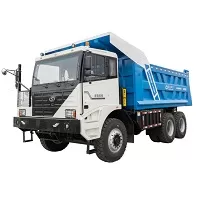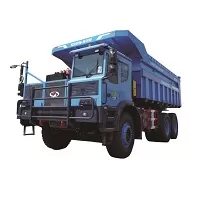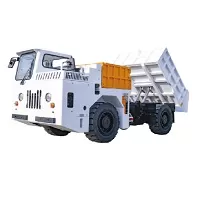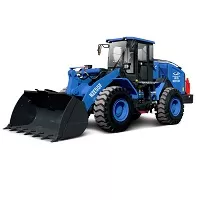
When you are looking for information about dump trucks, you may see another word: tipper truck.They seem to be the same thing, and no matter which word you type in, you will find what you are looking for.
For most countries, tipper trucks and dump trucks are virtually the same with no difference. For a few countries/regions, they differ in terms of capacity, usage and type. For Brits, there doesn't seem to be any difference between the two and tippers and dump trucks can be used interchangeably. But for Australians, the tipper is smaller and the dumper is huge and used for mining etc.
In many countries, “dump truck” and “tipper truck” are used to describe the same type of vehicle: a truck with a hydraulic tipping body that unloads loose materials by lifting the cargo bed. However, for buyers in mining, quarrying and heavy-duty transport, the two terms can point to different vehicle classes, payload ranges and working conditions.
In general, a tipper truck usually refers to a road-going or construction truck used for sand, gravel, soil, demolition waste and general materials. A dump truck, especially in mining and off-highway applications, often refers to a heavier machine designed for rough roads, larger payloads and continuous material haulage. If you are comparing vehicles for open-pit mines, quarries or zero-emission haulage projects, you may also see terms such as electric rigid dump truck, electric mining haul truck, off-highway dump truck and mining hauler.
They can be the same in everyday use, but not always in purchasing and engineering discussions.
A tipper truck is usually associated with smaller road-legal trucks or construction vehicles that unload materials by tipping the body.
A dump truck can refer to a broader range of vehicles, including standard construction dump trucks, off-highway dump trucks, rigid dump trucks and large mining haul trucks.
For mining buyers, the more accurate terms are often rigid dump truck, mining haul truck or off-highway dump truck, especially when payload, mine road conditions and operating cycle are important.
| Item | Tipper Truck | Dump Truck / Mining Dump Truck |
| Common Meaning | Road-going truck with tipping body | Broader term for construction, off-highway and mining trucks |
| Typical Application | Urban construction, road work, small infrastructure projects | Mining, quarrying, heavy construction, bulk material haulage |
| Road Use | Often road-legal depending on local regulation | Off-highway mining trucks are usually not for public roads |
| Payload Range | Usually smaller to medium payload | Medium to very large payload, depending on vehicle class |
| Working Road | Paved roads, construction sites, compact job sites | Mine roads, quarry roads, rough terrain, fixed haul routes |
| Vehicle Structure | Usually based on truck chassis | Can be rigid frame, articulated or wide-body mining design |
| Buyer Focus | Price, maneuverability, road compliance, body size | Payload, gradeability, battery/fuel system, durability, haul distance |
| Electric Version | Electric tipper truck for urban or construction use | Electric rigid dump truck or electric mining haul truck for mine haulage |
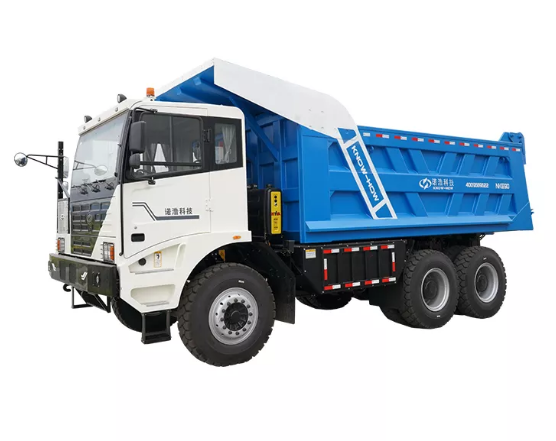
A tipper truck is a truck equipped with a hydraulic lifting system that raises the front of the cargo body and tips the material out from the rear. It is commonly used for transporting sand, soil, gravel, aggregates, demolition waste and construction materials.
Tipper trucks are widely used in construction, road maintenance, infrastructure projects and municipal engineering. They are usually selected for their flexibility, maneuverability and ability to work in relatively compact sites.
For buyers, a tipper truck is usually the right choice when the job involves:
Road transport between different sites
Urban or infrastructure construction
Small to medium payload requirements
Frequent unloading of loose materials
Projects requiring road registration or local road compliance
A dump truck is also designed to transport and unload loose materials, but the term is broader. It can refer to road dump trucks, site dumpers, articulated dump trucks, rigid dump trucks and large mining haul trucks.
In mining and quarrying, “dump truck” often means a heavy-duty off-highway vehicle designed to move ore, overburden, coal, aggregates or waste rock. These trucks are built for higher payload, rougher road conditions and longer daily operating hours than standard construction tippers.
For mining buyers, a dump truck is usually the right choice when the job involves:
Open-pit mine haulage
Quarry material transport
Large payload requirements
Fixed haul roads
Rough off-highway conditions
Long operating shifts
High-frequency loading and unloading cycles
The biggest difference is not the tipping mechanism, but the working application.
Tipper trucks are usually selected for construction and road transport. They are practical for city construction, highway projects, landscaping, building materials and short-distance transport.
Dump trucks, especially rigid dump trucks and mining haul trucks, are more suitable for heavy-duty off-highway work. They are commonly used in mines, quarries, large earthmoving projects and industrial sites where payload and durability matter more than road speed or compact maneuverability.
If your project is a mine or quarry, you should not only search for “tipper truck.” More accurate search terms may include:
Rigid dump truck
Mining dump truck
Mining haul truck
Off-highway dump truck
Electric rigid dump truck
Electric mining haul truck
Payload is one of the most important selection factors.
A tipper truck usually handles smaller to medium payloads and is often limited by road regulations, axle load limits and body size. It is suitable when the truck needs to travel on public roads or work in space-limited construction sites.
A mining dump truck or rigid dump truck is designed for much heavier loads. Depending on the model, it may carry 60 tons, 70 tons, 100 tons or more per trip. This makes it more suitable for large-scale material movement in mines and quarries.
For electric mining trucks, payload should be considered together with battery capacity, haul distance, road slope and charging method. A larger battery does not automatically mean a better truck. The right model depends on the whole operating cycle.
Tipper trucks are usually designed for paved roads, compacted construction sites and relatively moderate working conditions. They need maneuverability and road compliance.
Off-highway dump trucks are designed for rough mine roads, steep ramps, heavy dust, vibration and continuous loading cycles. Mining roads are very different from urban roads, so the vehicle structure, suspension, braking system, tires and powertrain must be selected for heavy-duty conditions.
If your haul road is fixed, wide and well-maintained, a rigid dump truck may be more efficient. If the road is soft, narrow, steep or constantly changing, an articulated dump truck may be considered. For electric mining operations, rigid electric dump trucks are commonly used where haul routes and charging plans can be clearly defined.
A tipper truck is usually built on a road truck chassis with a tipping cargo body.
A dump truck can have several different structures:
Standard dump truck: used in construction and road transport
Articulated dump truck: suitable for uneven or soft ground conditions
Rigid dump truck: suitable for high-volume haulage on mine roads
Wide-body mining dump truck: common in open-pit mines and quarry operations
Electric rigid dump truck: battery-powered vehicle for zero-emission mining haulage
For mining applications, structure matters because it affects payload, turning radius, gradeability, stability and long-term durability.
Traditional dump trucks and tipper trucks are usually powered by diesel engines. However, mining companies and contractors are increasingly comparing diesel trucks with electric Rigid Dump trucks to reduce fuel cost, emissions and maintenance.
An electric dump truck is not simply a diesel truck with a battery. For mining applications, buyers should check:
Payload capacity
Battery capacity
Battery type
Charging time
Battery swapping option
Drive motor configuration
Gradeability
Regenerative braking
Haul distance per shift
Suitability for downhill or uphill routes
In downhill mining haulage, regenerative braking can help recover energy during loaded downhill travel. This is one of the reasons why electric mining haul trucks can be attractive for some open-pit mines and quarries.
You need road transport
Your payload requirement is small to medium
The job site is urban, compact or infrastructure-related
You need flexibility and road registration
You mainly transport sand, gravel, soil or construction waste
You work in an open-pit mine or quarry
You need larger payload per trip
The truck will mainly operate off-highway
Your haul road is fixed or heavy-duty
You transport ore, coal, overburden, aggregates or rock
You need a vehicle built for continuous heavy-load operation
You want to reduce diesel fuel consumption
Your mine has fixed haul routes
You can plan charging or battery swapping
You need zero-emission operation at the job site
Your operating cycle is suitable for regenerative braking
You are building or upgrading a green mining fleet
Electric mining dump trucks are mainly used in open-pit mines, quarries, large construction material sites and industrial haulage routes. They are different from ordinary road tipper trucks because they are designed around heavy payload, off-highway durability and lower operating cost.
For example, a 90-ton class electric rigid dump truck may be used for 60–70 ton payload haulage in mines and quarries. A larger electric mining haul truck may be selected for longer routes, heavier payloads or higher daily production requirements.
When selecting an electric mining truck, it is important to match the vehicle to the actual working condition instead of only comparing model names or battery capacity. Important questions include:
What material will be hauled?
What is the required payload per trip?
Is the route uphill, downhill or mixed?
What is the road surface condition?
How long is the haul distance?
How many shifts will the truck run per day?
Is fast charging or battery swapping available?
What is the target fuel saving or emission reduction?
KNOWHOW focuses on electric mining vehicles and off-highway haulage solutions. Our electric dump trucks are designed for mines, quarries and heavy-duty material transport, not only for general road construction.
We provide battery electric mining trucks for different payload classes and working conditions, including 90-ton class and 105-ton class electric rigid dump trucks. Depending on the mine route, payload demand and charging plan, our team can help recommend a suitable electric mining haul truck configuration.
Our electric mining dump trucks can support:
Open-pit mining haulage
Quarry aggregate transport
Coal mine material movement
Metal ore and overburden transport
Downhill mining haulage
Zero-emission fleet replacement projects
Electric mining equipment pilot projects
Dump trucks and tipper trucks may look similar because both use a tipping body to unload materials. In everyday use, the two names are often interchangeable. But in mining, quarrying and heavy-duty equipment purchasing, the difference matters.
A tipper truck is usually more suitable for road transport, construction and smaller payloads. A dump truck, especially a rigid dump truck or mining haul truck, is more suitable for large payload, off-highway roads and continuous mine operation.
If your project requires zero-emission haulage, lower diesel consumption and heavy-duty off-highway performance, an electric rigid dump truck or electric mining haul truck may be the better choice.
With over 40 years of experience, we are able to offer a wide range of heavy duty trucks to our customers worldwide. Dump truck, Tipper, Dumper, Tipper Truck, Wheel Loader and Excavator are our specialities.
Designed to provide superior driver safety, our vehicles are highly visible and manoeuvrable and meet stringent crash test requirements. They are electrically powered, ensuring compliance with local environmental standards and giving the driver a comfortable and quiet driving experience. As a result, our heavy duty trucks are completely safe and comfortable for people and the environment.
As an ISO9001:2000 certified manufacturer of heavy duty trucks, we have focused on producing high quality vehicles from the very beginning. We have a well-established quality control system that monitors every stage of manufacturing, from raw material selection, through production, to delivery to the customer. This helps us ensure the quality of our tractors, tippers and cargo trucks.
We are committed to providing our customers with professional and courteous service so that their trucks run smoothly and their business continues to be profitable. We offer warranties on all of our products, and we can also provide you with samples of our heavy-duty trucks to help you choose the best product for your needs. In addition, our team of highly trained technical support engineers and sales technicians will help you solve any problems you may encounter when buying or using our tractors, tippers and lorries.
The cost of owning a dump truck can vary greatly, so it makes sense to work with a team you can trust! We can help you select and equip new or used dump trucks that are easy to use and maintain. Our service team can answer any questions you may have today, and you can apply online to finance your purchase! If you're curious, please feel free to reach out!
Need help choosing between a tipper truck, dump truck or electric mining haul truck? Contact KNOWHOW to share your payload, haul distance, road slope and working condition. Our team will recommend a suitable electric dump truck configuration for your mining or quarry project.
Generally called dump trucks, tippers are one of the most important vehicles used during any construction projects. Strong and powerful, they are employed to transport concretes, ballasts, stones, gravels, demolition wastes, and many other loose materials from one site to another.
Nowadays, there are various types of dump trucks. The term 'dump truck' is derived from the truck's ability to lift its front end, allowing the load to be discharged or dumped by gravity. Available in a range of shapes and sizes, tipper trucks are highly convenient for transporting loose materials in industries like mining and construction.
Capacity is the most intuitive distinction between tipper and dump truck.
The tipper can be driven on the normal road system due to its small size. This also means that dump trucks require less pulling power, a job that can usually be done by pickup trucks.
Dump trucks have a much larger capacity, usually up to 30 tonnes or more. As a result, dump trucks require specialised tractors, and only pickup trucks can't pull dump trucks. Some dump trucks used for mining can even have a capacity of 250 tonnes. In order to protect road safety, some cities will ban mining dump trucks from driving on the road.
The capacity will determine the use of the truck, so there is a big gap between the tipper truck and the dump truck.
A tipper can be made of wooden slats or steel and is used to transport agricultural materials such as feed, corn and wheat. Tipper trucks usually dump their loads from the back. In Australia, tippers can also be used to transport soil, gravel and other materials.
A dump truck is usually made of steel and is mainly used to transport road construction or maintenance materials. It is a common type of truck in the construction and mining industries. Dump trucks are also indispensable for transport in the mining industry.
Tipper trucks can handle various types of loads, including loose soil, brick rubble, and scrap metal. Their flatbed design also allows for transporting machinery to and from job sites.
The tipping mechanism enables quick and effortless unloading, minimizing manual labor and increasing efficiency.
Tipper trucks provide precise unloading, ensuring materials are placed exactly where needed, improving workflow and site organization.
When choosing between the two, you need to ask yourself a few questions
Your choice between a dump truck and a tipper will depend on the size of your project and the size of the site under construction. dump trucks are typically used on large construction sites for medium to large construction and infrastructure projects. In addition, tipper trucks are used to transport loose materials over rough terrain. Meanwhile, tippers are designed for smaller construction and infrastructure projects, which have more space constraints on the site. The larger size of tipper trucks does not provide the same agility or manoeuvrability as dump trucks, meaning they are not the best choice for smaller construction sites.
Also if you are working on an off-road site or in a construction environment where there are no paved or public roads, you can use both a dump truck (usually an articulated tipper truck outside of a mining environment) and a road-registered dump truck, provided the ground is stable enough to allow the tipper's tyres to run. Articulated tipper trucks tend to have larger tyres, and the greater the surface area of the tyres, the more likely they are to operate effectively on softer ground aggregates. However, dump trucks with larger wheelbases can often handle softer stuff as well. As a result, you have more options for off-road work. However, you cannot drive an unregistered off-road dump truck on any public road in Australia without risking fines and significant business penalties. If you have to transport materials on any state or local road, then your only options are a road registered tipper truck and a licensed heavy duty rigid driver.
Often (but not always) dump trucks are used in residential and commercial locations where there are no paved roads, as they carry a much larger payload - the smallest articulated tipper trucks carry around 20 tonnes, with a maximum load of around 70 tonnes. Read more about tipper truck capacities. In the case of road-registered trucks, 20 tonnes is the maximum for a single truck tipper, such as a lorry and dog, in terms of payload capacity. You can get more capacity from a tipper by choosing a tandem tipper or truckr configuration. If you want to carry more than 60 tonnes per payload, then you're looking at a rigid rear tipper truck - but these trucks are rarely used in residential and commercial locations because they have horrendous turning radii and are expensive. You'll find these big boys more commonly in mines and quarries, where their payload capacity can stretch to 380 tonnes. Believe it or not, that's not the heaviest payload capacity a dump truck can carry. Find out which machine is striking gold in the world's 5 largest mining tipper trucks.
All dump trucks have very limited flexibility in where they can dump their haulage material - they can only dump directly into the back of the truck. The turning radius of these trucks is also very large, so dump trucks are rubbish in narrow aisle environments or in areas where the truck cannot make a large turn to dump or remove material. This is especially true for rigid rear dump trucks, which essentially require the space of several football fields to turn around. Most dump truck hydraulics work in the same way as dump trucks, where the hydraulic components use gravity to push the truck upwards to remove its contents. Much of the ingenuity and innovation that was the subject of content removal related to truck cabs and levels of manoeuvrability. Placing the dump truck into a space where its contents can be removed as close as possible to the excavation or landfill site will minimise the amount of work required by other earthworks equipment to move the material to the required location. The side dump truck has been innovated to allow material to be pushed to the side rather than the back of the truck, which is handy for situations such as pipe laying or trench filling. Belly dumpers are another ingenious invention where the belly of the truckopens up to remove the contents from underneath the tipper. You'll see these used in mining operations where the tipper travels over aggregate hops and dumps them through a screening grate.
Jul. 23, 2022
View More
Jun. 15, 2022
View More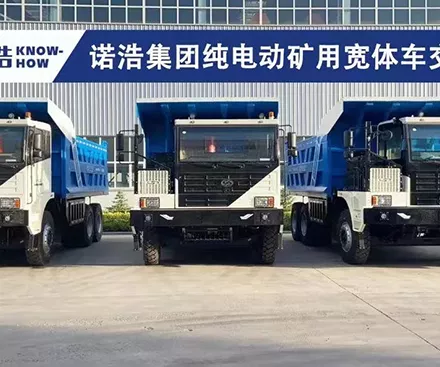
Jun. 01, 2022
View More