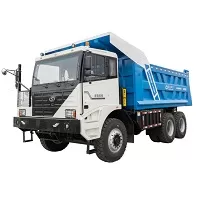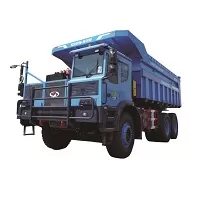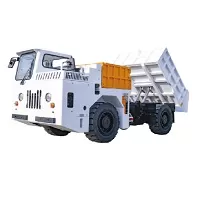
The electric dump truck industry faces significant challenges, particularly concerning range limitations and battery efficiency. Many fleet managers face pain points such as unpredictable operational ranges and the inability to complete crucial tasks without frequent recharges. A primary misconception is that simply increasing battery capacity will solve these issues. However, real-world scenarios reveal that complexities such as energy consumption, weight factors, and charging infrastructure play equally critical roles.
When discussing electric dump truck performance, fleet managers often focus on battery capacity, measuring it in kilowatt-hours (kWh). While higher battery capacities can theoretically provide longer ranges, they also lead to increased weight. For example, a 300 kWh battery can add up to 4,000 pounds to the vehicle\'s gross weight, significantly impacting energy efficiency and range. According to a study from the International Council on Clean Transportation, every 10% increase in weight results in a 4-6% increase in energy consumption. This is a harsh reality for operators relying on electric dump trucks for heavy construction jobs.
Electric dump trucks are subjected to various operational conditions—from steep inclines to heavy loads. These conditions drastically affect how energy is consumed. A study conducted by the Electric Power Research Institute reveals that, under heavy loads, energy consumption can soar by as much as 40%, rapidly depleting battery resources. Therefore, regardless of battery capacity, actual operational range may fall short of expectations. This highlights the necessity of an efficient energy management system that optimally distributes power, rather than merely relying on a larger battery.
While battery size is important, the charging infrastructure cannot be overlooked. Fast-charging solutions have evolved, with systems capable of charging an electric dump truck to 78% in just 30 minutes. However, if the necessary charging stations aren\'t available on-site or nearby, the advantages of a larger battery become moot. A study by the U.S. Department of Energy indicates that over 60% of fleet operators list inadequate charging infrastructure as a primary barrier to electric vehicle adoption. Therefore, it’s imperative to create a comprehensive energy ecosystem that includes both powerful batteries and accessible charging solutions.
Comparing vehicles solely based on battery capacity can be misleading. For instance, an electric dump truck equipped with a 350 kWh battery may seem superior to one with a 250 kWh battery; however, if the former has inadequate energy management or suffers from inefficiencies due to weight, its practical range could be less than that of the latter. Performance analytics provided by companies like KNOW-HOW showcase how optimized energy distribution systems can significantly extend the functional range of smaller batteries.
Real-world applications of electric dump trucks underline the interplay between battery capacity and operational efficiency. A recent case study from the Heavy Construction Association revealed that companies implementing advanced energy management systems saw a range improvement of up to 30% without any increases in battery size. This demonstrates that strategic operational practices can yield better results than solely relying on larger batteries.
Solely focusing on battery capacity as a solution for electric dump truck range issues is an oversimplification of the challenges involved. Fleet managers need to consider a holistic approach that includes vehicle weight, energy consumption patterns, and efficient charging infrastructures. By incorporating these critical factors, you can maximize the effectiveness of electric dump trucks while ensuring that your operational needs are met.
If you\'re ready to explore more about how to maximize your electric dump truck efficiency beyond battery capacity, we encourage you to reach out to KNOW-HOW for a consultation or trial. Our solutions can revolutionize your fleet\'s performance.
Not necessarily. Range is influenced by weight, energy management, and operational conditions, which can negate the benefits of larger batteries.
Charging infrastructure is critical. Operators face significant operational challenges without adequate charging solutions, even with large battery capacities.
Yes, implementing effective energy management can lead to substantial improvements in operational range and battery life, often more effectively than merely increasing battery size.

Jul. 23, 2022
View More
Jun. 15, 2022
View More
Jun. 01, 2022
View More